All posts by admin

Che sorpresa ti aspetta nel vivace casinò lazybar: generosi bonus, giri gratuiti e una selezione di giochi colorati renderanno la tua serata fantastica.

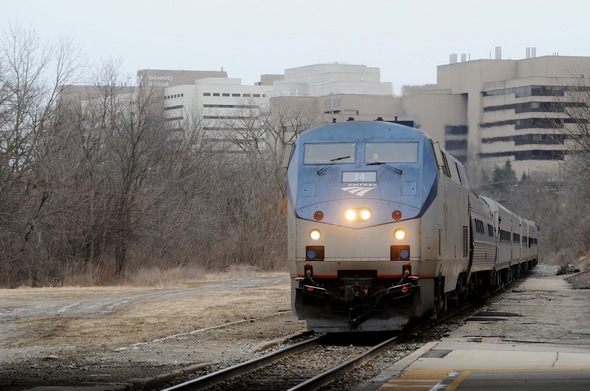
Ann Arbor officials debate building new Fuller Road train station vs. upgrading current Amtrak site

From AnnArbor.com:

The University of Michigan’s decision to halt plans for a parking structure as part of Fuller Road Station leaves Ann Arborofficials contemplating the proposed transit center’s future.

Some, including Council Member Mike Anglin and the Huron Valley Group of the Sierra Club, argue the city should shift its attention away from Fuller Road to the existing Amtrak train station on Depot Street and run more buses in and out of that site.

“Considering the train comes there only a few times a day, it’s an easy place where buses can come and meet them and take the passengers where they need to go,” Anglin said. “I think we have a site right now, and therefore why jump and make another site that’s unnecessary?”

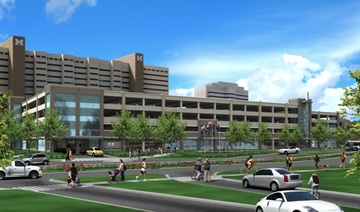
Mayor John Hieftje and other city officials argue a brand-new transit center, including accommodations for buses and trains, in front of the U-M medical complex along Fuller Road still makes sense. Hieftje said it’s the perfect location considering 24,000 people a day already visit the U-M medical complex and Depot Street is not a major destination point.

“It can serve as a real gateway to the city of Ann Arbor,” he said of the Fuller Road site. “The Depot Street station won’t work for many reasons. Amtrak is going to outgrow it before long and it’ll never work for commuter rail. You can’t get buses in there to transport people.”

Hieftje said the City Council will have a more intensive conversation about Fuller Road in the near future as it discusses accepting a $2.8 million federal grant for preliminary work on the project.


Anglin, D-5th Ward, stirred up the issue at Tuesday’s council meeting when he suggested the city should drop its plans for building a transit center in Fuller Park.

“The high-speed rail, which has already been funded from Kalamazoo over toward Chicago, will ultimately come our way,” Anglin acknowledged. “And as rails are improved, the fact that we have a train station, I think we ought to use that land for it.”

Anglin said Amtrak’s trains pass through Ann Arbor only a few times a day, and the Depot Street area is not as congested as some might suggest.

“It’s much easier for buses to just be present when the trains come,” he said. “There are a number of people on the trains, and buses going to different destinations makes a lot more sense to me. We can’t keep spending as if every idea we have is fundable.”

Pointing out a new train station would cost millions of dollars, Anglin said the city has greater needs in the police and fire departments, as well as in roads, trees and parks.

The local chapter of the Sierra Club has fought to stop the city from building on city parkland along Fuller Road. The group agrees with Anglin that a better location to achieve the city’s vision for a multi-modal transit center is at the site of the existing Amtrak station.

“Now that the university parking garage portion of the plan has been dropped, we urge the city to take this opportunity to reconsider the potential for upgrading the current Amtrak station and environs,” reads a statement released by the group. “This location is still relatively close to the hospital, is closer to downtown, is adjacent to the intersection of the north/south rail line, and is more suited to additional transit-related development.”

But city officials contend they’ve looked into that option and — citing logistical challenges and traffic issues — Fuller Road is the better site.

Marc Magliari, a Chicago-based spokesman for Amtrak, said station location decisions are driven largely by the communities themselves, with Amtrak and the Michigan Department of Transportation working them and the railroad that owns the tracks.

“What is clear in the case of Ann Arbor is our passenger volumes have exceeded the size of the current station and its parking, particularly the difficulty passengers face when using the parking lot on the opposite side of the tracks from the station,” Magliari said.

Council Member Sabra Briere, D-1st Ward, said at Tuesday’s meeting she hopes Anglin will join her on a walk through the area around the current Amtrak site.

“Because there are some interesting issues related to infrastructure and the types of infrastructure improvements that would have to happen before we could have buses and cars going in large quantity into that site,” she said.

The city is hoping Fuller Road Station can serve as a future gateway for tens of thousands of regular visitors to the city and accommodate the future growth in rail ridership as high-speed rail from Detroit to Chicago and commuter rail from Detroit to Ann Arbor become realities.


Briere said if increased passenger rail service through Ann Arbor happens, the city is going to need to address the logistics of where the station is today. She said the city has the choice of thinking about it now or pretending it’s not a problem.

“There are so many people coming into North Main Street and turning onto Depot that it can back people up three lights,” she said. “Depot floods, sometimes over a foot. If we have buses lined up there to pick up passengers from the rail station, it’s going to negatively affect the residential nature of that neighborhood and it’s going to slow down people even further.”

Briere said she’s supportive of a train station at Fuller Road, but she’s happy to wait until there is an increased level of train usage and the tracks are improved, which could take two years.

“I have no idea when we’ll get increased train traffic, but I do look at the logistics and I don’t think Depot can bear a lot of increased passenger use,” she said.

Council Member Tony Derezinski, who is contemplating a run for mayor in two years if Hieftje steps down, said he remains committed to the vision for a transit center on Fuller Road.

“I think it’s definitely full steam ahead on the project,” he said. “The most attractive part is it’s being a railroad station and a center of intermodal transportation. It’s going to be the main entrance to the community when mass transit really reaches its potential here.”

Derezinski said the city must push ahead with Fuller Road Station and “take steps now to see the wonderful results down the line.”

Council Member Jane Lumm, an Independent who represents the 2nd Ward, is asking the city’s administration for a full accounting of all Fuller Road Station expenses to date. It’s estimated the city has spent hundreds of thousands of dollars on preliminary work for the project and it has undertaken a $1.34 million project to relocate utility lines at the site.

“The money has not been wasted at all,” Eli Cooper, the city’s transportation program manager, told AnnArbor.com in an email, adding his sense is the city will pick up from where it is now — less U-M’s interest in a parking garage — and move Fuller Road Station forward.


Lumm thinks it would be helpful to “hit the pause button” and have a robust community conversation about the project. She said citizens are asking questions about the status of the next phases, and posing many thoughtful alternatives for consideration.

Anglin said the city should be involved in discussions about the future of rail in Ann Arbor, but not building a train station using city dollars. Instead, he said the city should cooperate with Amtrak and the Federal Railroad Administration to talk about the potential on Depot Street.

Now that DTE is cleaning up the old MichCon site off Broadway Street near the current Amtrak station, Anglin said, that’s all the more reason to look at the area’s potential.

“If we use the MichCon site, there would be no effect on park land. That would just be an eliminated discussion,” he said. “No new construction costs would be related to it since the train is already there on that site. Future train expansion costs would only be incurred when a commuter service line would come in and funding was available.”

Hieftje said one of the problems with the current Amtrak site and surrounding location is that it’s in the floodway, which isn’t a good place to make such a major investment.

He said he’s been working for a long time through a group called The Wolfpack and talking to DTE about the riverfront property Anglin referenced.

“If everything works out as planned, that will become a great new riverfront park,” he said. “As you know, our most desirable parks are right there next to the river and that would become a new park in the city as soon as the cleanup is fully accomplished.”
Source: http://www.annarbor.com/news/ann-arbor-transit-center-debate-build-new-train-station-on-fuller-road-or-upgrade-current-amtrak-sta/#.T0cADQXXIpw.email

Train-ing days – commentary on the new 110 MPH service in Michigan

From the Arenac County Independent:

When I read that the U.S. Department of Transportation gave Amtrak the OK to start running trains at 110 mph between Kalamazoo and Indiana, two thoughts went through my head. The first was “Well, it’s about time,” and the second was “Why did we let our transportation system get so bad that 110 mph is impressive?”

At one time, this country had a transportation network that was the envy of the world. We built the still-impressive interstate highway system that revolutionized automobile travel, and have had a network of rails since the mid-1800s that spreads from coast to coast. Our major cities had public transit options that let even those without cars get around easily.

Somewhere along the line, however, we got complacent and stopped giving our infrastructure the attention it deserves, and now other major countries have passed us by in leaps and bounds. Now we have slow, outdated trains, roads and bridges that are perennially in need of funding, and public transit systems so poor in some cities that even the buses cannot be counted on.

A few months after visiting Japan in 2005, I spent a few days in Chicago, taking the train out there. I rode the Amtrak from Detroit, with its tiny, bare, and sad little station, making the 280-mile journey in about five hours. The Kalamazoo-Indiana corridor, at the time, could reach speeds of 90 mph, a major bragging point for the train operator.

Once in Chicago, I rode the elevated train line through the city. While certainly functional, the system was chronically underfunded for years, and it showed. The city’s train had expanded its routes over the years, but the older lines simply did not have much money to keep updated. On the way back to Detroit, the Amtrak train was stopped for a half hour, as a commercial train was using the same track ahead of us.

I bring this all up as a contrast to the trains I rode in Japan. Public transit is practically a must for that country, as most of the livable land is on the coastline and space is at a premium. The local trains that extend from city to city ran regularly and felt like they weren’t going to fly off the track at any given moment, unlike Chicago’s intercity train. And comparable routes, such as the intercity buses, trains, and subways in Osaka or Kyoto, were incredibly efficient and could be counted on to show up when the schedule said they were supposed to.

Then you have the shinkansen, or bullet trains, that run across the main Japanese island of Honshu into the westernmost island, Kyushu. Those traveled at 187 mph as a regular cruising speed, and are able to get to speeds over 275 mph on conventional rail lines. Even the oldest models, which operated from 1964 until 2008, were running at 137 mph — faster than the speeds our trains are capable of reaching. Considering we have so much more ground to cover, and the cost of airline fuel just keeps going up, this seems unacceptable to me.

France, Japan, Taiwan, and China are all selling superior locomotive transit technology around the globe. I know President Barack Obama has been big on the idea of equipping our rails with similar systems to help make it easier and cheaper for people to get around with ever-rising fuel costs, but he has been stymied by members of Congress.

For me, however, it seems like a no-brainer. Our current transit system needs a tune-up. Train ridership is way up from a few years ago. For all the money the federal government sinks into the military budget to help secure our interests overseas, I imagine some of that could be spared to help improve some things at home.

I realize it is rather unlikely any sort of high-speed rail system will find its way to Arenac County, but it would be one step closer to making our state more competitive in the world market, and more appealing to tourists. In the end, I believe that would benefit everyone.

Source: http://www.arenacindependent.com/detail/93339.html

Ann Arbor halts Fuller Road Station plans as U-M seeks to build new parking elsewhere

From AnnArbor.com

The city of Ann Arbor and the University of Michigan announced today they’re halting plans for the first phase of Fuller Road Station as presently designed.

U-M is dropping its plans for a large parking structure on the site and will look elsewhere to build new parking facilities, officials confirmed.

Mayor John Hieftje said the decision to separate U-M’s short-term plans to build new parking facilities for its hospital employees from the city’s long-term plans for a train and bus station on Fuller Road has nothing to do with any controversy surrounding the project.

Rather, Hieftje said, the city received new communications from the Federal Rail Administration and funding assumptions for the project have changed.

“After months of fruitful discussions, we received new information from the Federal Rail Administration regarding the eligibility of monies for the local match,” Hieftje said. “This information altered project timing such that we could no longer finalize a proposal under the current memorandum of understanding.”

According to FRA, any investments made on the site prior to federal funding being allocated for the project don’t count as matching dollars, Hieftje said.


“This means we’re going to have to work with community partners to come up with a match,” Hieftje said. “This is in no way backing away from the project.”

Hieftje said city officials will continue to push forward with the long-term vision for Fuller Road Station in partnership with the Michigan Department of Transportation, Federal Rail Administration, Amtrak, Ann Arbor Transportation Authority and U-M.

“There just won’t be a large parking structure on the site,” Hieftje said. “U of M is going to look elsewhere for their parking structure.”

Both the city and U-M say they remain committed to supporting multi-modal transportation, but they’ve decided to wait until federal funding sources for track sidings and station construction are more imminent before redesigning and restructuring any potential joint agreement.

“We are optimistic the city’s drive to win additional federal and state dollars for Fuller Road Station will be successful,” Jim Kosteva, U-M’s director of community relations, said in a statement. “When the time comes, we stand ready to reengage.”

Controversy has surrounded the Fuller Road Station project since it was announced in 2009 that U-M and the city would parter on the first phase, which included building a five-level, 977-space parking structure at a cost of more than $40 million.

The university was going to pay 78 percent of the costs of the parking structure, and thus have rights to 78 percent of the parking spots. The city would have paid about $10 million.

If not for a tentative deal in 2009 to make that happen, U-M would have pushed forward with a plan for two new parking structures on Wall Street along with a new bus terminal.

The university’s original goal was to build new parking facilities in the area before the new Mott Children’s Hospital opened late last year, so there’s still pressure for more parking.

While long-term planning for Fuller Road Station will continue, officials said the university plans to move forward separately with building a parking structure in a yet-to-be-determined location near the medical campus to address growing employment and patient numbers.

“I think it’s pretty well known with the medical center enlargement that they need more parking, but they’re not set on a location,” Hieftje said.

Hieftje said he thinks the concept for Fuller Road Station is easier to understand now that the U-M parking structure is off the table. He said a new train station bringing thousands of visitors into the city — with bus services connecting them to downtown and other areas — will lessen the demand for more parking facilities and reduce traffic congestion and air pollution.

“I view this whole announcement as being very positive,” Hieftje said. “It’s just a slight change of course for the university, but our goals remain the same.”

Some city residents have expressed concerns over the past few years that more parking facilities aren’t needed, and that once a parking structure was built on the site, there would be no guarantee that federal funding for a new train station would follow.

It’s now looking increasingly likely the project would be done in a single phase, including a train station. Hieftje said there would be some parking, but not a significant amount.

“It’ll be the kind of parking you would need at a train station,” he said. “It wouldn’t be a large parking structure for the university.”

Hieftje remains confident the federal government’s investment of $2.8 million in seed money for planning Fuller Road Station is indicative of more federal funding to come.

In the meantime, the feds have pumped hundreds of millions of dollars into rail improvements along the Detroit-to-Chicago corridor, which passes through Ann Arbor. The same improvements that will make high-speed rail possible (increasing speeds from 60 mph to 110 mph) will help make commuter rail between Detroit and Ann Arbor possible.

Kosteva said rail service and connections with bus transit on Fuller Road are vital components in the university’s goal of providing sustainable transportation options.

“We look forward to cooperating with the city in its ongoing efforts to bring interstate and intercity rail service to the Fuller Road site,” he said.

With the state of Michigan’s purchase of the Norfolk-Southern tracks, the construction of a multi-modal transit center at Fuller Road becomes deeply important to the future of Ann Arbor and critical to the success of both commuter and higher-speed rail, Hieftje said.

The first phase of Fuller Road Station was approved by the city’s Planning Commission in September 2010, but it never came to council for approval due to delays having to do with legal negotiations between U-M and the city on a long-terms construction, operations and maintenance agreement for the parking structure. Included in the Phase I plans approved by the Planning Commission were five built-in bus bays and 103 bicycle parking spaces.

Even with the U-M parking structure off the table, it’s likely the Fuller Road Station project will continue to face opposition from some residents who argue a transit center is an improper use of city park land. The city’s charter requires sale of city park land to be approved by voters, and the proposed location of Fuller Road Station technically is part of Fuller Park.

City officials don’t intend to put the project up to a vote of the people, arguing it’s not technically a sale and the actual location has been a surface parking lot for years.

The Sierra Club and others still argue the city would be circumventing the law by building facilities that would almost ensure the land won’t return to park space in the next century.

The City Council took action in July 2010 to change the permissible uses for property zoned “public land” to include “transportation facilities,” which allows a train station at Fuller Park.

The city has spent hundreds of thousands of dollars on preliminary work for the project, some of which will be reimbursed by federal grants. The city also has undertaken a $1.34 million project to relocate utility lines at the site of the Fuller Road Station project.

City officials were hoping dollars invested in the first phase of the project would count as matching funds for future federal grants for a train station, but they found out from the Federal Rail Administration that’s not going to be the case.

Hieftje said the project timeline is uncertain now.

“We need to get a little further into the environmental study and the design of the project before we’ll be able to put a timeline on it,” he said.

Kosteva said U-M’s decision not to build a parking structure as part of Fuller Road Station in no way represents a backing out, failure to reach terms or retreat in the face of controversy.

“It is a joint recognition that the station and parking as presently designed could not be financed and constructed under the general terms of the memorandum of understanding,” he said, adding the agreement between the city and the university not only identified financial expectations, but also included the desire to have a facility in place by June 2012.

“When federal funds or city commitment for funding a station development are more imminent, the university will be prepared to reengage in a discussion that would include an assessment of how a intermodal facility relates to university needs and interests at that time,” he said.

As far as alternative parking locations being considered, Kosteva said the university is exploring a variety of locations in the vicinity of the medical center, including the Wall Street site previously approved by the regents for construction.

The growth in U-M’s medical-related employment, including 500 new jobs, and expansion of patient services dictates the need to move ahead as quickly as possible, he said.

Source: http://www.annarbor.com/news/fuller-road-station-first-phase-plans-halted/

Amtrak train from Chicago to Port Huron hits car

From The Lansing State Journal:

An Amtrak train heading from Chicago to Port Huron struck a car west of Lansing Thursday evening, killing the car’s occupant and temporarily stranding about 120 train passengers.

The collision occurred about 9:30 p.m. near the intersection of Millett Highway and Lansing Road in Delta Township, according to John Clark, Delta Township Fire Chief.

The driver of the vehicle, who was believed to be the car’s only occupant, was killed, Clark said.

A female passenger on the train was treated and released for an unknown illness or injury.

About 120 people were on the eastbound train, and about 70 of those were to disembark at the East Lansing Amtrak station.

Clark said those passengers were being bused late Thursday on Waverly school district buses to the train station. The remaining 50 or so passengers were remaining on the train, which had heat and electricity, Clark said. It was not clear when officials would be able to restart the train.

Alexis Mayorga, 20, of Chicago was traveling on the train to visit a Michigan State University student, and said she had fallen asleep and awoke to notice the train had stopped. She said she takes the train every time she comes to East Lansing, and at first thought it was a temporary delay.

“Kind of a shock,” she said. “I was just hoping everyone was OK.”

Lee Stone of Aurora, Ill. was in the back of the train and traveling to East Lansing. He said he knew something was wrong, because “The train was slowing down way too fast to be coming up on any station.”

Clark said it is unclear what caused the crash, and whether the gates were functioning at the time of the incident or whether the driver tried to go around the gates. The tracks have both gates and flashing lights.

The Eaton County Sheriff’s Office has interviewed the train’s conductor, Clark said. a Sheriff’s Office official said the department could not have a statement until sometime Friday.

Investigators were examining the gates and lights at the railroad crossing shortly after midnight. Both appeared to be functioning normally.

An Amtrak reservations official says she was aware of the accident and that she had no other details. Amtrak police declined comment Thursday night.

The Associated Press and State Journal reporter Lindsay VanHulle contributed to this report.

Source: http://www.lansingstatejournal.com/article/20120216/NEWS01/302160054/Amtrak-train-from-Chicago-Port-Huron-hits-car-?odyssey=mod%7cbreaking%7ctext%7cFRONTPAGE

Rail officials demonstrate new 110 mph Amtrak service

Federal, state and local officials joined with Amtrak and the Michigan Department of Transportation (MDOT) in a demonstration of the new 110 mph service on the Wolverine line between Porter, Ind., and Kalamazoo, Mich.

Amtrak and MDOT recently received federal approval to increase maximum speeds of Amtrak trains in western Michigan and northern Indiana to 110 mph following the successful installation and testing of a positive train control safety system on Amtrak-owned track between Kalamazoo and Porter. Amtrak’s popular Wolverine and Blue Water train passengers will benefit from this improvement in service.

Source: http://www.youtube.com/watch?v=HgfKSH0GtV4&list=UU23tfYjZxEq5GeHGCtV6iJA&feature=plcp