All posts by admin

Che sorpresa ti aspetta nel vivace casinò lazybar: generosi bonus, giri gratuiti e una selezione di giochi colorati renderanno la tua serata fantastica.

Transport Action Ontario Annual Meeting March 27 in Toronto

Transport Action Ontario (formerly Transport 2000 Ontario) will hold its Annual Meeting and afternoon program at:

Metro Hall, 55 John St., Room 302
Toronto
Saturday 27 March 2010

AGM, 10 a.m. – 12 noon
Reports by President and Treasurer.

Election of executive and directors. Nominations are invited and can be submitted to the Chair of Nominations, Bruce Budd at bfb@primus.ca.

A complementary lunch is provided to members and guests who attend the morning annual meeting. Reservations are recommended for which your telephone number or e-mail is needed. Please contact Dan Hammond at: 1-888-410-4779; danielshammond@gmail.com or Tony Turrittin; 416-653-0607; turitti@yorku.ca by 20 March 2010

Afternoon event: 1:30p.m. – 4:00 p.m.
DRIC: Road-Based Infrastructure in the Era of Climate change

This panel discussion focuses on the important but underreported issue of the Detroit River International Crossing project (DRIC). A panel of speakers, two from Michigan will uncover the weaknesses behind this expensive, unsustainable and outdated infrastructure plan.

Speakers:

  • Dr. Dietrich Bergmann, Ann Arbor, Michigan
  • Albert Koehl, Ecojustice, Toronto Office
  • Paula Lombardi, Ambassador Bridge Company, Warren, Michigan
  • Emma Cane, Sierra Club, Ontario
  • Dan Hammond and Natalie Litwin, Transport Action Ontario

Ann Arbor-to-Detroit rail line delayed due to funding shortage

From AnnArbor.com

The scheduled date to start daily service of a commuter rail line between Ann Arbor and Detroit has been indefinitely delayed due to a shortage of funding.

Carmine Palombo, director of transportation programs for the Southeastern Michigan Council of Governments, said the Ann Arbor to Detroit rail will run only for special events beginning in October. No new target date has been set as the agency searches for more money.

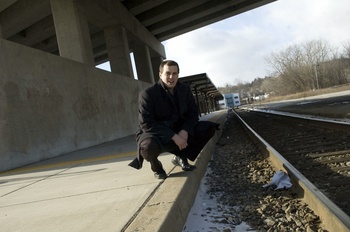
Jeff_Irwin_rail.jpg But Palombo said the process toward the original goal is still in motion.

“We’re still trying to develop this project, and we’re still working toward four trains a day,” he said. “We just weren’t as successful as we would have liked to be getting the money, so we came to the conclusion we weren’t going offer four round-trips.”

Read more:
http://www.annarbor.com/news/ann-arbor-to-detroit-rail-line-delayed/

MARP testimony before the Michigan House Transportation Sub-Committee

Fischer/Langdon Testimony

Michigan Environmental Council and Michigan Assoc. of Railroad Passengers

 Testimony to the Michigan House Appropriations Sub-Committee on Transportation

9:00 am Tuesday, March 9, 2010


Fischer:

 Chairman Gonzales and members of the committee:    

 Thank you for the opportunity to speak with you this morning.  My name is Tim Fischer.  I am the Deputy Policy Director at the Michigan Environmental Council.  MEC is made up of about 70 environmental, public health and faith based organizations from around the state.  One of our member groups is the Michigan Association of Railroad Passengers who is represented today by John Langdon.      

 Langdon:

 My name is John Langdon.  I am from Holland and serve on the Executive Committee of Michigan Association of Railroad Passengers.   The Michigan Association of Railroad Passengers is a statewide all-volunteer organization.  MARP was established in 1973 to improve and promote passenger train service, travel conditions for passengers, and to work for the preservation of historic rail stations. 

Fischer:

 We have not come here today to outline how the sky is falling.  And we won’t.  That does not mean that we will avoid the difficult issues, but we will focus on our opportunities.  We would like to frame this particular discussion in the positive. 

 This is what we plan to briefly cover this morning:  

 (1) the benefits of passenger rail investments and what we as a state do well in terms of passenger rail transportation,

(2) what our opportunities are, and

(3) how we might maximize them.      

Langdon:

 First, the benefits of passenger rail investments and what we as a state do well.    

 Passenger rail is a catalyst for economic development that invariably accompanies it.  Businesses near rail stations profit.  Companies whose employees take transit benefit. And travelers lured to the “Pure Michigan” experience spend money with our friends and neighbors.

 MDOT recently concluded that rail routes cost the state about $7 million per year and return about $62 million.  That’s a spectacular return on investment.

 Tourism

 Passenger rail service enhances the economic and tourism benefits for Michigan.  It brings people to our state to spend money – we want, and need, more of that.  More routes and increased frequencies of existing routes would bring more people to the state.    

 Good infrastructure getting better

 Our three passenger rail routes operate on pretty good tracks.  Our tracks from Porter, Indiana to Kalamazoo are owned by Amtrak and permit some of the fastest train speeds in the country.  We have some beautiful and functional train stations that are great welcome centers to some of Michigan’s cities.  Jackson’s train station is the oldest continually operating train station in the country.     

 Passenger rail service works to develop synergies with freight rail partners – when rail infrastructure is upgraded, both passenger trains and freight trains benefit.  This is because freight and passenger trains share the same tracks.  A freight train traveling from Wyoming to Michigan with hundreds of coal cars must pass through Chicago.  An Amtrak train with three passenger cars must typically wait until a freight train passes.  This delays passenger trains and makes Amtrak an inconsistent and sometimes frustrating way to travel.  The good news is that this type of train congestion affecting Michigan trains will soon be a thing of the past because of ARRA HSR grants dedicated to un-corking this bottleneck.   

 Dedicated – and increasing – ridership

 Michigan has dedicated train travelers and enthusiastic supporters.  The Michigan Association of Railroad Passengers works to promote Michigan’s existing three train routes.  We hold events at railroad stations and help make sure that Amtrak operates a clean, efficient, and customer friendly service in our state.  We conduct passenger surveys and always find considerable support for train travel in Michigan.    

 Ridership is at historic highs.  People want transportation options.  People want to travel by train and a lot are doing this on Michigan’s three routes.  Michigan’s trains carried over 400,000 passengers last year.  East Lansing ridership alone has more than doubled in the past six years (from 21,914 in 2003 to more than 50,953 in 2009). 

 People will use trains for travel and commuting if given the opportunity.  A new train stop was added this year on the Pere Marquette route in New Buffalo, MI – it was one of three new stops added nationwide – ridership at that stop increased by 61%.  This confirms what happens across the country: ridership increases with increased availability and frequency. It’s exciting when new train service comes to town, but what makes it really exciting is the economic development / tourism growth that comes with it.  That’s what more Michigan communities could experience with increases in routes & frequency.

 Departmental support  

 MDOT has done a great job of maintaining our current passenger rail system – and even strengthening it – under the circumstances.  The director of our state transportation department created an office dedicated to seizing potential opportunities such as Recovery Act funding and Public Private Partnerships.  Tim Hoefner, the Administrator of this office will likely speak to his activities later this morning.  This office quickly pulled together about $1 billion in various requests in response to opportunities that arose from the ARRA (or stimulus package) – namely over $ 8 billion in high speed rail investments. 

 Fischer:

 Next, the opportunities

 But first, I’ll quickly define High Speed Rail for this context.  Regional HSR runs between 110 mph and 150 mph for distances of up to 200 miles.  This is the type of service that we’re talking about with the federal grants.  It has more stops than Express HSR, but is still faster than air travel with the benefit of city center to city center service – with your shoes on.   Express, or true, HSR is 150 mph service between points of about 400 miles apart.  This service has very few stops.  Express HSR could replace regional air travel – it is cheaper, faster and considerably more fuel efficient.  These trains are commonly called bullet trains.    

 The clear growth trend across the country in transportation is passenger rail investment.  This is in part because of a renewed focus on passenger rail transportation.  The federal government has distributed roughly $10 billion in the past two years (PRII, ARRA Amtrak, ARRA HSR, TIGER, etc.), with little or no state match, specifically for passenger rail improvements and most anticipate that this trend will continue.  These are great opportunities, but they’re not opportunities for free money.  There’s a catch, of course.    

 The Federal Rail Administration cautioned that the states that have political support (and shows it with solid funding) for existing passenger rail service and plans to expand that service are the states which will be competitive for future federal passenger rail grants.

 In January President Obama announced $8 billion in competitive grants for high-speed rail in the U.S.  California got $2 billion, Florida and Illinois each got over $1 billion. Michigan settled for $40 million to upgrade three train stations.

 These high speed rail grants were competitive. The states that pulled in more rail funds were the ones that made investments of their own in sustaining and expanding existing passenger rail systems. 

 Voters in California approved a $10 billion ballot initiative to support high speed rail. Last summer, the Illinois legislature approved $400 million to expand the state’s rail system. Florida spent more than $500 million acquiring land to build a high speed rail line and the legislature endorsed the state’s rail plan in a special session. 

 Last year Wisconsin spent $47.5 million to purchase new trains from Spanish train manufacturer Talgo—who then agreed to open two new manufacturing facilities in Wisconsin. When the $8 billion in federal money was announced, Wisconsin got $822 million. 

 But while Wisconsin’s governor was negotiating with Talgo, our governor was proposing a 25 percent cut in the state’s passenger rail funding.  While the Illinois Senate was approving that $400 million to expand passenger rail, our senators were looking to cut rail funding in half.  Ultimately, your version was adopted which cut passenger train funding by about 25%.  

 We missed the opportunity for significant amounts of money in the first round of ARRA HSR grants, in large part, because the state failed to demonstrate that it would fully fund our existing trains. There are two more HSR grant rounds – in order to make Michigan competitive for this grant money, the legislature must fund our current trains and work toward expanding future investments, or we will watch more of the money we send to Washington head to other states.

 There are a couple of bright spots here.  Two days after the US Department of Transportation awarded ARRA HSR grants, Amtrak announced it will perform a high-speed rail improvement study, at their expense, that will focus on determining what infrastructure upgrades are needed to provide 110 mph train service on the rail corridor between Kalamazoo & Dearborn. Importantly, the information gathered from Amtrak’s study can support Michigan’s applications for future rounds of funding from federal intercity and high-speed rail capital improvement grant programs.

 And, recently a federal TIGER grant in the amount of $25 million was announced for the Woodward Avenue light rail project.

 Near-Term Vision 

 We handed out a map called “Michigan’s Passenger Rail Opportunity, 2012.”  This is a near-term vision conceived of and supported by the Michigan Association of Railroad Passengers membership.  The new routes (Grand Rapids to Lansing to Detroit, Grand Rapids to Kalamazoo, and Lansing to Jackson) are logical routes on existing freight rail tracks.  These routes will connect Michigan’s principal cities and the east and west sides of the state. 

 Right now, our passenger rail routes focus on Chicago – moving our citizens to Illinois’ big city to spend money.  Let’s increase our in-state travel options along these lines.  Let’s make it easier for a Grand Rapids resident to travel to Detroit to watch a game or a show; for a Lansing resident to travel to Grand Rapids; etc.  Very real possible expansions beyond this map include a passenger rail route to Traverse City and Petoskey.       

 Langdon:

 How Michigan might maximize our opportunities 

 Right now, you can support the Governor’s recommended FY 11 budget for passenger rail which would fund our current system at $8.667 million.   

 We might be able to flex ARRA funds.  Oregon announced last week that it will buy two more trains from Talgo and bundled their order with Wisconsin’s, saving $6 million on the order.  Oregon bought these trains with ARRA funds that were left over from highway construction projects where the bids came in under estimates.  ODOT flexed these ARRA transportation funds to purchase trains. 

 We’ve presented a short-term vision as to what passenger rail could look like in 2012, with your support.  Now, how to pay for it (besides using General Fund money)?  Here is one idea from Oregon:

 Vanity Plates

 Oregon pays for its passenger rail system through vanity plate fees.   Michigan could do this as well.  In 2008 Michigan sold close to 250,000 vanity plates.  If we assessed an additional $50 per plate fee for each plate (which would bring the total voluntary vanity plate fee to about $65 per plate) we could raise well over $10 million per year.  We could dedicate these additional funds to help pay for our current passenger rail routes and to expand our routes to include the routes we proposed today.

 An Idea

 Why not add another train from Chicago to Kalamazoo.  Amtrak could run one train out of Chicago in the evening, overnight it in Kalamazoo, and return to Chicago the next morning. A type of Regional service providing folks that work in Chicago the opportunity to live in Michigan    

 Fischer:

Conclusion

 We really are near a crossroads here.  The Federal Rail Administration has made clear that the states which will be competitive for future federal passenger rail grants are those with political support for existing systems (which equals funding them) and vision for expanding those systems.  We ask you to do just this.

Meeting minutes – February 13, 2010 – Jackson

MINUTES
MICHIGAN ASSOCIATION OF RAILROAD PASSENGERS
Monthly Membership Meeting
Darryl’s Restaurant, Jackson
February 13, 2010


Those Signing In:  Hugh Gurney, Barney Whittier, Jack Kesler, Rich Vavra-Musser, Don Monteith, Dan Platz, Burton TenBrink, Keith Martin, Phil Chamberlain, Bob Tischbein, Dick Pekarek, Kay Chase, Jim Hinkins, Steve T. Sobel, John DeLora, John Guidinger, Dan Fingas, Dale Gartner, Julien R. Wolfe, Clark Charnetski, John Langdon, Robert Patterson, Diane Patterson, Andrew Kent, Archie Lhamon, Kathleen W. Newell

Also Present:  Lisa Wozniak, League of Conservation Voters

Call to Order:  Chairman DeLora called the meeting to order at 10:02 a.m.

Guest Speaker:  DeLora then introduced Lisa Wozniak, Executive Director of the League of Conservation Voters.   Her organization, Wozniak explained, was founded sixteen years ago to hold officials accountable for their actions.  After a rough start, Wozniak assumed the reins as Executive Director in 2005.  The organization now has six full time staff.  Its goal is public education about conservation issues and building the effectiveness of allied organizations.   The League works to break partisan gridlock on conservation and ecological issues.  With their help, a young man concerned about the environment was elected from the Michigan district with the longest stretch of lakeshore.

As a non-native, Wozniak was amazed at the extent of the Great Lakes when she moved to Michigan.  Preserving these resources is a deep responsibility. 

The reality as we face 2010 is that Michigan is locked in partisan gridlock.  We have a lame duck governor and the House and Senate are controlled by opposing parties with the leaders of each vying to be the next governor.  We can expect very little action in this election year.  The 2010 election will be chaotic with open races in all three statewide offices, and 28 of the 38 senate seats open.  All senate and house seats are up for election.

Whoever wins will control redistricting of both the house and senate. 

In this environment, we can make a difference if we get involved and work to get people elected who support our issues and concerns.  The Alliance for Justice has published a booklet, Rules of the Game, which discusses what non profits can and cannot do.  As long as we are not talking about a specific piece of legislation, it is not lobbying.  Individuals can get as involved in elections as they care to.

                                                             -1-

In this election cycle, we need to examine the campaign promises of each candidate.  MARP members need to speak with their own individual legislators and attend legislative breakfasts.  MARP needs to a) Focus on key legislators and b) Those who are looking to be re-elected and who will hold senior positions.

In response to a question from Fischer, Wozniak indicated that her organization does a questionnaire which will go to every legislator.  She would be happy to include rail issues in this questionnaire.  As a 501(c)(4), her organization can do this.  However, they still have to be sure that the questionnaire avoids editorializing. 

Fischer reminded Wozniak that rail transportation is a conservation and environmental issue as transportation uses about one third of the energy in this country.   Wozniak then discussed the Michigan Environmental Briefing Book put out by the Michigan League of Conservation Voters and the Michigan Environmental Council, which does support a greater emphasis on public transit. She asked for MARP’s input on a regular basis as she updates her legislative briefings throughout the legislative year.

Acknowledging Charnetski’s comment that members should attend coffees, Wozniak added that small donations to candidates are also important. 

Langdon urged that MARP assign members to define key issues and work with Wozniak on these issues. 

In concluding, Wozniak reminded the group that MARP as an organization can spend up to 20% of its time in “Issue briefing” and members as individuals can be very direct in their support of issues.

Treasurer’s Report:  Randall reported that, as of January 31, 2010, there was $2,655.07 in the checking account and the value of the Pratt Fund was $12,907.88.  Newell moved acceptance of the Treasurer’s Report.  This was seconded by Sobel and approved by the members present.

Minutes:  After review, Langdon moved acceptance of the minutes of the January 9, 2010 meeting in Lansing with corrections.  The motion was seconded by Charnetski and approved by the members present.

Introductions:  All members present introduced themselves told where they were from.

Coordinator Reports:

            Public/Governmental Affairs:  Langdon reported that a supplemental appropriation of $2.5-$3 million will be needed to fully fund Amtrak operations for fiscal year 2010.  For fiscal year 2011, $8.667 million is included in the governor’s proposed budget. 

                                                                   -2

This year, the Senate will introduce all appropriation bills, which may be a hurdle.  However, the fact that the transportation budget is being cut may prod action.  Langdon has been talking with Pure Michigan and the Michigan Lodging and Tourism people about their interest in full funding for Amtrak in fiscal year 2010.

The Stimulus Funding of the Englewood Flyover in South Chicago is very important to Michigan as it will eliminate a major bottleneck for Michigan Amtrak trains. 

DeLora added that stimulus funding will also reduce congestion between Porter, Indiana, and Chicago. 

According to DeLora, the legislature will probably raid the Comprehensive Transportation Fund again this year to support the General Fund.  A bill to raise the tax on diesel fuel and move both the diesel and gasoline tax up in several increments is likely. 

            Membership:  Vavra-Musser reported that the membership renewals for 2010 were in the mail thanks to Kay Chase.  He noted that our membership in the Midwest High Speed Rail Association was up for renewal and moved that we renew our membership in MWHSR at the $200 level.  The motion was seconded by Sobel.  After discussion, the motion passed with one abstention.

            Communications:  Chase reported that she had attended at half day workshop put on by Transit Riders United.  Another session is scheduled for February 26.  TRU has created a Business Outreach Team and will host a breakfast with community leaders in Troy on February 28.

TRU is planning a rally this summer in support of the Ann Arbor-Detroit commuter rail project.  MARP needs to keep in touch with TRU on this issue as well as working with TRU on the National Train Day celebration.

MARP also needs to support upcoming legislation that would create a Detroit Regional Transportation Authority.

A report on Interstate Traveler was issued in January.  The news release was very glowing, but the actual recommendations questioned funding and how the system would be operated.

                        Newsletter: Valderas pointed out the ad in The Michigan Passenger promoting reduced fares on Amtrak during the winter.  This information is also included in the Amtrak link on the MARP website. 

Valderas has checked and the printer is not set up to mail newsletters to the membership.  A total of 4,000 copies of the winter issue of The Michigan Passenger were printed.

                                                                -3-

                        Outreach:  Langdon passed around the spreadsheet with upcoming events and asked for volunteers.  He indicated that he and Chase would be attending a renewable energy fair at the Pierce-Cedar Creek Institute near Hastings and that he and Gurney would be attending the National Train Day event in Toledo.  Newell indicated that she would also like to help staff the table in Toledo.

Regional Chair Reports:  East/Central:  Fischer noted that on his last trip to Chicago, the Blue Water was one hour late.  At the High Speed Rail seminar he attended there, he learned that Florida received major funding for its High Speed Rail project because it got its act together and state officials were really behind it.  This is a good example to point out to Michigan legislators who were very equivocal, resulting in minimal funding for Michigan projects.  He tried to keep his comments to the Detroit Free Press positive, but Michigan really needs to be more proactive.  DeLora commented that he got twelve seconds when  Channel 7 reported on the issue. 

Patterson suggested we use Illinois as our example of a successful state who has put more money into rail in recent years and got rewarded well in the High Speed Railroad grants.

Fischer agreed and noted that Wisconsin would be another nearby example.

Fischer introduced Dan Fingus who will be working out of theMichigan Environmental Council office as the state coordinator for  Transportation for America which is working to build support for legislation in Washington sympathetic to public transportation.

Pekarek reported on the upcoming grand reopening of Durand Union Station next weekend, highlighting all that has been done to restore the damage done to the archives and museum in the fire last winter.  DUSI is asking for MARP input into its upcoming exhibits on Michigan railroads.

Pekarek also reminded the group that Indian Trails will be celebrating its 100th anniversary in 2010.

            Northern: Kent noted that he had left newsletters for Mount Pleasant Railroad Days.  Monteith recently attended a meeting in Wisconsin on how they plan to get more passenger rail.  The head of WisDOT is 120% for rail.  Minnesota is planning a passenger rail line from the Twin Cities to Elk Lake and eventually to Fargo.  Monteith will try to resend information on this.

            Western:  Langdon handed out copies of the new route guides for the Pere Marquette and Blue Water.  These are the only route guides for non overnight trains. 

On February 24, Langdon met with Hoeffner of MDOT on the routing of the Pere Marquette.  We need to correct the Midwest Regional Rail Initiative maps showing the train running from Grand Rapids to Chicago via Kalamazoo.  Since opening of the new station, New Buffalo has seen a 59% increase in ridership.

                                                                 -4-

Valderas noted that the Pere Marquette was one hour late leaving Grand Rapids earlier in the week because nobody was around to shovel it out after a significant snowfall.

Vavra-Musser reported that plans are now in place for red, blue and green buses to meet each train at St. Joseph and take passengers to hotels and resorts.

            Metro: Hinkins reported that the next MARP meeting will be on Saturday, March 20 at the Grand Trunk Pub in Detroit.  Carmine Palombo of  SEMCOG will review plans for the Ann Arbor-Detroit commuter rail project.  Hinkins noted a change in the location of the proposed storage tracks in Detroit.  About a mile of relocated track is planned at West Detroit.  As presently envisioned, the Ann Arbor-Detroit service will consist of two round trips between end points in the morning and two round trips in the evening, utilizing two train sets of three cars each.  Current Amtrak service will supplement the new service which is expected to start in October, 2010.  We need to hold SEMCOG to this schedule.

DeLora is working to have Amtrak accept commuter passes on its Ann Arbor-Detroit service, which is very lightly used.  Charnetski noted that the present Ann Arbor station will be the western terminus of the new service.  The City of Ann Arbor is negotiating with the gas company for additional parking.

Jackson Rail Plans:

Guidinger noted that Amtrak has received $963,000 in ARRA funds for restoration of the Jackson Depot, the oldest operating railroad station in the United States.  Quinn Evans of Ann Arbor is doing the architectural plans.

 Another $60,000 has been awarded to the City of Jackson by MDOT to further planning on turning the depot complex into a transportation center similar to that in Kalamazoo where rail, local transit and intercity buses would all converge.  Guidinger is on the planning committee.  Unfortunately, the recent departure of the City Manager has slowed this process.

Jackson’s mayor is very interested in having the proposed Ann Arbor-Detroit commuter rail project extended to Jackson, which has the rail service facilities.  The Jackson Organization for Economic Growth sees High Speed Rail as an important component of its vision. 

Guidinger noted that he is no longer on the Amtrak Advisory Committee.  Jim Wallington has assumed that role.  However, Guidinger does have excellent data on baggage service that he will share.

Guidinger urged MARP to appoint a representative to the Toledo Area Council of Governments’ rail committee, which is very active.

                                                                   -5- 

New Business:  

Amtrak Running in Winter:  Sobel stated that the ticket agents at the Ann Arbor station report on time performance except on rare occasions.  Amtrak has reduced weekend fares to regain the patronage of University of Michigan students.  The weekend fare between Ann Arbor and Chicago is now $40 as opposed to $70.

            National Train Day:  To be discussed following the meeting today.  Robert Patterson and Kay Chase serve on the subcommittee chaired by Valderas.

            Nominations:  Whittier noted that he was receiving a good orientation from DeLora, Vavra-Musser and Langdon.  He asked members to contact their state representatives and senators urging approval of a supplemental appropriation to keep the Pere Marquette and Blue Water  running throughout fiscal year 2010.  He will be asking for volunteers to serve with him on the nominations committee.

            Widgets: Vavra-Musser discussed what he called a “station widget”, a program which would add current passenger rail information to the web sites of Convention and Visitor Bureaus across Michigan and their links to restaurants, motels and resorts.  The “widget” would provide information about train schedules, current specials, buying tickets online and maps to the stations.  Vavra-Musser asked that MARP invest $500 in the “widget” project being undertaken by the Harbor Country Convention and Tourist Bureau.  The motion was seconded by Sobel and approved by the members present.


Other Business:

            Wozniak urged members to go to www.michiganlcvedfung.org/GubernatorialForum  and submit questions for the Gubernatorial Forum, May 12, at Central Michigan University sponsored by a partnership of the Detroit Free Press, Michigan Radio, ConservAmerica  And the Michigan League of Conservation Voters (CV) Education Fund.

            Charnetski asked members to check the WisDOT website for information about Wisconsin rail plans.

            Vavra-Musser noted that Fred Upton’s congressional district has the most Michigan Amtrak riders.

            Sobel reminded the group of the March 6 Town Hall meeting in Chicago hosted by Trains magazine and Amtrak.

                                                                 -6-


Adjournment:  Guidinger moved adjournment.  The motion was seconded by Sobel and approved by the members present.

Respectfully submitted:                                              Accepted:

Hugh D. Gurney, Secretary                                        John DeLora, Chair

                                                                  -7-


Save 20% on Amtrak Travel in Michigan

Enjoy a Ride between the Great Lakes

See the great state of Michigan as it’s meant to be seen on the Blue Water, Pere Marquette and Wolverine and save 20% through April 29, 2010.

Getting there is half the fun — and on the train your time is your own. Catch up with friends or a good book. Or tune out and enjoy the view. There’s a lot to see in Michigan, such as more than twenty historically preserved cities like Lapeer, Kalamazoo and Battle Creek. Or visit Detroit, the birthplace of Motown. Plus, the lively university town of Ann Arbor is a center for performing arts.

Get ready to see everything between the Lakes, and save 20% on a ticket when you click on the “Book It Now” button.

Terms and Conditions
  • Valid for 20% off the regular (full) adult rail fare.
  • Valid for sale January 1, 2009 – April 29, 2010.
  • Valid for travel January 2 – April 30, 2010.
  • Blackout dates:
     – January 3 – 4, 2010
     – February 12 and 15, 2010
     – April 2 and 4 – 5, 2010
  • Offer is valid for travel on the Blue Water, Pere Marquette and Wolverine only.
  • Reservations must be made at least three days prior to travel date.
  • Up to two children ages 2-15 may accompany each adult at half the regular (full) adult rail fare.
  • Seating is limited, seats may not be available on all trains at all times.
  • Valid for Coach seats only; upgrade to Business class is allowed upon payment of full applicable accommodation fee.
  • Fares, routes and schedules are subject to change without notice.
  • Subject to any restrictions, blackouts and refund rules that apply to the type of fare purchased and upon which the discount is based.
  • Once travel has begun, no changes to the itinerary are permitted.
  • Not combinable with any other discount offer.
  • Other restrictions may apply.

Book your reservation on Amtrak’s website:

http://www.amtrak.com/servlet/ContentServer/AM_Content_C/1246042803253/1