All posts by admin

Che sorpresa ti aspetta nel vivace casinò lazybar: generosi bonus, giri gratuiti e una selezione di giochi colorati renderanno la tua serata fantastica.

PTC installation on Wolverine route should be done in late 2016 or early 2017

From The Detroit News:

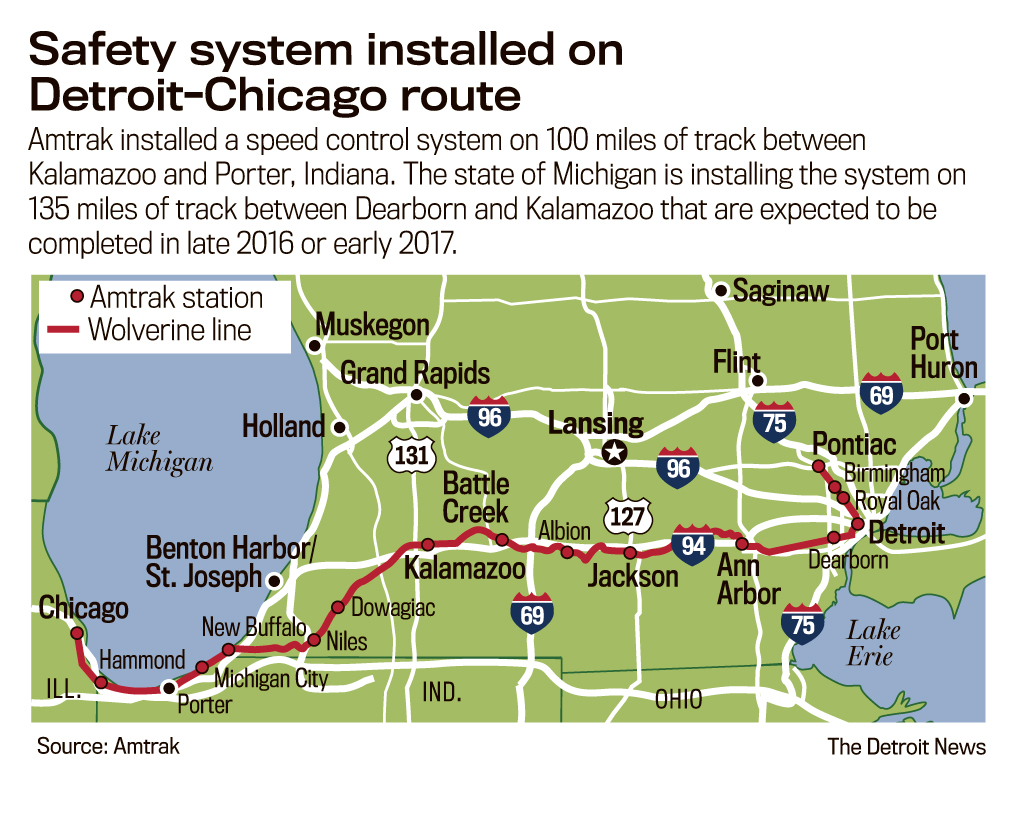
Amtrak and the state expect to have a speed control safety system along 283 miles of tracks in a year and a half as part of their effort to get faster passenger trips averaging a little more than four hours between Detroit and Chicago.

Michigan Department of Transportation rail chief Tim Hoeffner said the so-called positive train control system, part of more than $400 million in upgrades on the Wolverine Route, will protect against tragedies like the May 12 Philadelphia crash that killed eight people and injured 200.

“The engineer gets a target … when he will have to start lowering the speed,” Hoeffner said. “If you do not do that, the system says ‘we are watching’ and will take action to shut down the train.”

Amtrak installed the system on 100 miles of track it upgraded more than two years ago between Kalamazoo and Porter, Indiana. The state will have it on 135 miles of track between Dearborn and Kalamazoo that are undergoing upgrades to be completed in late 2016 or early 2017, Hoeffner said.

Automated train controls are federally required for higher-speed passenger rail by the end of the year, but hadn’t been installed on the section of track where the Philadelphia derailment occurred. Federal regulators say few rail operators will meet the deadline, according to press reports.

Hoeffner said the Michigan Department of Transportation, Amtrak and the Federal Railroad Administration began collaborating in the 1990s on a positive train control system for the Wolverine Route. The route carries more than 500,000 passengers a year.

Called Intermittent Train Control System, Michigan’s version of the technology first was installed between Kalamazoo and Porter, Indiana. Trains have hit speeds up to 110 miles an hour there since February 2013, Hoeffner said.

Contractors now are installing the system with track upgrades between Dearborn and Kalamazoo. Michigan is using $387 million in federal grants and $37.5 million of its own money to buy and improve the tracks for 110-mile-an-hour train speeds, according to Hoeffner.

“Our intention is to have higher speeds all the way across Michigan,” said Amtrak spokesman Marc Magliari in Chicago. The route has the most miles of 110 mph Amtrak rail outside the Northeastern corridor, Magliari said.

Hoeffner said the train control setup combines modern technology with traditional signal lights spaced at intervals along the track, which have told engineers since the early 1900s to slow, stop or remain at regular speed.

Engineers now also receive the same directions from an on-board display. If they fail to respond, the system can halt the train, after which the engineers need clearance from the railroad’s control center to restart, Hoeffner said.

The goal of MDOT and Amtrak is to run trains safely at higher speeds to lop more than an hour off Detroit-Chicago trips, making them competitive with auto travel, Magliari said.

“A lot of days of the week we’re already faster than driving, considering traffic congestion in Chicago and Detroit,” he said.

But there’s one remaining obstacle to reliably faster service: Passenger trains run at lower speeds and often get stalled — sometimes more than an hour — waiting for traffic to clear from the busy rail corridor between Porter, Indiana and Chicago’s Union Station.

It’s one of the nation’s most congested rail corridors, handling more than 100 trains a day and a key reason Wolverine Route trains often arrive behind schedule, Hoeffner said.

The state is partnering with Indiana and Illinois and the Federal Railroad Administration on an environmental study for a preferred passenger route through the area.

The study, whose completion is due in a few months, is a step toward applying for federal grant money. Hoeffner said the state hopes for federal approval of its study and suggested improvements by spring 2016.

Amtrak also set up a blue ribbon panel in October 2014 to address Chicago rail gridlock that Amtrak President and CEO Joe Boardman said causes unacceptable passenger service interruptions. Four-hour delays are a near-daily occurrence between Chicago and Cleveland, Amtrak said in a statement.
me_amtrak_wolverine_061015

Source: http://www.detroitnews.com/story/news/politics/2015/06/13/amtrak-make-mich-routes-safer/71182876/
Troy (TRM)

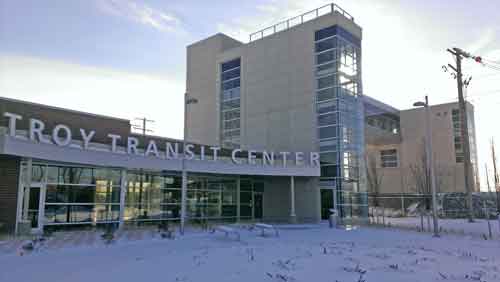
Troy Transit Center
1201 Doyle Drive  Troy, MI 48084

Photo by Larry Sobczak

This station replaced the Birmingham Amtrak station (BRM) in October 2014.

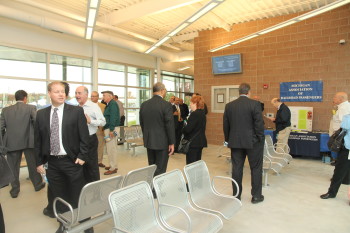
100 20141014 Interior of Transit Center. Note MARP table left hand side, rear.
Photo by Steve Sobel.

This modern facility is located at the elbow curve of Doyle Drive which runs from W Maple Rd to Coolidge Highway in Troy. If approaching from W Maple, Doyle Drive is located one quarter mile west of Coolidge and east of the railroad tracks. If approaching from Coolidge, Doyle Drive is the boulevard driveway entering the shopping center.

The station is located behind the shopping center between the gap in the complex separating Krogers from Kohls (current retailers as of June 2015.) There is a parking lot designated for the station across the street on Doyle Drive where it is safe for travelers to leave their cars overnight.

There is a taxi stand and taxis around train times. There are three Smart bus routes along Maple Road approximately one quarter mile north. Future plans include bringing a Smart bus stop in front of the station as well as intercity bus service.

There is a climate-controlled waiting room on the Doyle Drive side of the tracks. It is recommended that you arrive for your train with enough time to cross over the elevated walkway to the passenger platform on the opposite side of the tracks. There are two elevators and the station is completely handicap accessible. The station is unstaffed but it is opened at least a half an hour before scheduled trains. There is no checked baggage and no Quik-Trak ticket machine. There are modern bathrooms.

The city of Troy is near the center of one of the wealthiest counties in the U.S. Many corporations have located their national and regional headquarters in the city.  Somerset Collection, which is located 1.5 miles north of the station, is home to many top-tier and exclusive retailers. Downtown Birmingham is less than 2 miles from the station and considered the top shopping shopping districts in the Metro Detroit region. Both shopping districts can be accessed by Smart Bus or a short taxi drive. Adjacent to the station is a more traditional strip mall that has many quality retailers as well as affordable places to eat.

Visit the Troy station page at Amtrak:
http://www.amtrak.com/servlet/ContentServer?pagename=am/am2Station/Station_Page&code=TRM

Round 1 Public Meetings for Coast-to-Coast Passenger Rail Study Continue

Public meetings will take place along the rail corridor of the proposed passenger rail service between Michigan’s freshwater coasts known as the Detroit – Holland Passenger Rail Ridership and Cost Estimate Study, or simply the Coast-to-Coast Passenger Rail Study. The study is the first step toward reestablishing passenger rail service linking Detroit, Lansing and Grand Rapids.

Who: This study is being managed by the Michigan Environmental Council in partnership with the Michigan Association of Railroad Passengers, the Ann Arbor Area Transportation Authority and the Michigan Department of Transportation. Public meetings are hosted by the Michigan By Rail team.

Why:  Join us at one (or more!) of our 16 public engagement meetings to share your thoughts and ideas about potential passenger rail service that re-connects our freshwater coasts. Note: Round 2 and 3 of public meetings will take place in July and September 2015 and will be announced at a later date.

What: Public meetings to gather ideas and input on the proposed Coast-to-Coast line

When & Where:  

Click to enlarge
Click to enlarge

More Information: 

The meetings will provide an opportunity for the public to share ideas and input on the potential passenger rail service. The public engagement portion of the study is led by Michigan By Rail team in partnership with stakeholders and institutions along the potential line. The study is funded by a federal grant with a public match provided by 11 organizations and institutions located along the potential corridor.

In 2010, Michigan by Rail hosted public forums throughout the state to garner feedback on the Michigan Department of Transportation (MDOT) State Rail Plan. A desire for passenger rail service connecting Detroit, Lansing and Grand Rapids was one of several key themes that emerged.

Along with public feedback, the study will also analyze travel patterns, demographic trends, cost estimates and existing conditions of rail infrastructure to determine what, if any, next steps should be taken to examine the possibility for new passenger rail service.

The study is being managed by Michigan Environmental Council through a partnership with the Ann Arbor Area Transportation Authority and MDOT. The consulting firm, Transportation Economics & Management Systems, Inc., has been hired to complete the technical analysis. A final report is expected by December 2015.

Print and share the flyer: PDF, IMAGE

For questions or to request special accommodations, please contact Liz Treutel at (517) 487-9539 or liz@environmentalcouncil.org.

June 2015 edition of OnTrack

Click here to save this file or to view it as a PDF in full screen.

The  June issue of ON TRACK is attached. We hope you enjoy. As always, your comments and thoughts are most welcome. If you have a story idea please send it to marprail@yahoo.com.

Please note that this issue includes complete information about the June 20, 2015 MARP membership meeting at The Crossroads Village. Non-members are most welcome to attend. If you plan to attend, please reply to this email with the number in your party. If you would like to carpool to the meeting, please reply to this message. We will do our best to arrange something.

Included in this issue:

  • Coast-to-Coast Passenger Rail Study, Round 1 public meetings June 9-22, 2015
  • Call for volunteers to help with public meetings for the Coast-to-Coast Passenger Rail Study
  •  MARP meeting and activities, June 20, 2015 at Crossroads Village
  • PayPal now available on marp.org for joining or renewing your membeship
  • Amtrak Train Days in Michigan
  • Heads up on Amtrak Exhibit Train in Grand Rapids, July 25, 2015
  • The 3rd Annual Michigan Rail Conference – early bird registration open until June 15, 2015
  • Iowa Pacific Holdings and the new Hoosier State
  • Amtrak Honors Veterans

We hope you enjoy the issue and that you will let us hear your comments and suggestions. If you would like to write a story or suggest an item to be covered, email us at marprail@yahoo.com

Click on images below if you don’t have a PDF reader.

ontrack_45_Page_1ontrack_45_Page_2ontrack_45_Page_3ontrack_45_Page_4


M1 Rail CEO: Future expansion depends on federal money

From M-Live:

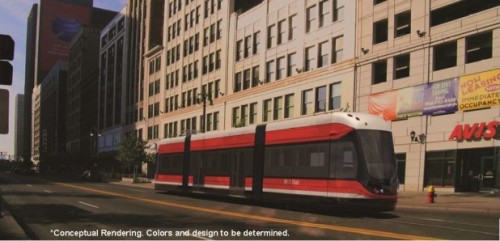
Brookville-Car-2-FINAL.-FIXED-e1433787339352-618x298The $140 million lightrail project underway in Detroit has received more than $100 million in philanthropic money from donors, M1 Rail President and CEO Matt Cullen said Monday.

But such money could not be depended on for an expansion of the 3.3-mile streetcar system – whether to Pontiac, Ferndale or even just to Eastern Market. It would depend more heavily on federal dollars, Cullen said.

“They’re much, much more likely to support the expansion of an existing system than a new one, so that was one of the reasons we embarked on doing this ourselves,” Cullen said after speaking at a Detroit Economic Club luncheon.

And those federal dollars would only come after the project has proven to be a useful addition to the community, he said. Cullen said once the M1 Rail line is up and running, and hopefully is a foundation for the Southeast Michigan Regional Transit Authority, then later it could be built upon.

In the works since 2008, the M1 Rail was first envisioned as a 9-mile Light Rail Transit system stretching from near the Detroit River to 8 Mile Road. But in 2011 that plan was scrapped in favor of the 3.3-mile line, for fiscal reasons.

Cullen said he thought initial estimates for a linear line out to 8 Mile were in the $600 million range, but said he is unsure what exactly it would now cost to expand the line there or beyond to Pontiac, for example.

“It probably wouldn’t be hard to extrapolate a per-mile, kind of a linear expense, but it’d be hundreds of millions (of dollars), obviously,” he said.

Construction work of the initial lightrail line is evident up and down Woodward Avenue. Scheduled to be complete later next year, the off-wire streetcar will run from Congress Street in Detroit’s central business district up to Grand Boulevard near the Fisher Building in the New Center area.

Also on Monday, M1 Rail officials named Brookville Equipment Corporation to design and build six individual streetcars, along with parts and support services for $32 million.

The streetcars from Brookville Equipment are expected to arrive in the fourth quarter of 2016. They’ll be equipped with vertical bike racks, WiFi wireless internet and HVAC systems to accommodate Southeast Michigan’s wide-ranging weather, and will comply with the Americans with Disabilities Act.

The latest breakdown of public and private money for the M1 Rail project could not be obtained Monday. Messages seeking this breakdown were left with M1 Rail.

According to a report last month in Crain’s Detroit Business, government funding from the federal, state and local levels totals $74.2 million, including two grants totaling $37.2 million from the U.S. Department of Transportation.

Cullen and proponents have said that similar projects across are followed by 10-20 times as much economic investment.

“We would expect to see billions of dollars in economic development,” Cullen said Monday.

Source: http://www.mlive.com/business/detroit/index.ssf/2015/06/m1_rail_ceo_future_expansion_d.html