MINUTES
MICHIGAN ASSOCIATION OF RAILROAD PASSENGERS
MONTHLY MEMBERSHIP MEETING
BANGOR AMTRAK STATION, BANGOR
OCTOBER 12, 2013
Members Present: Steve T. Sobel, Hugh Gurney, Marilyn Guidinger, John Guidinger, Dave Vander Bee, Jim Hinkins, Doug Wilson, Christine Ballard, Bob Tischbein, Jack Kessler, Chuck Merckel, Jeanie Merckel, Clark Charnetski, Dan Platz, Jim Wallington, J. P. DesCamp, Ron Leatz, Don Westcott, Barb Spaulding-Westcott, Kay Chase, Ken Ratzlaff, Dianne Patterson, Robert Patterson, Rosemary Horvath
Call to Order: There being no quorum for the Executive Committee Meeting, Chairman Tischbein called the Monthly Membership Meeting to order at 11:05 a.m. All present introduced themselves.
Speaker: Tischbein then introduced Ken Radzlaff, owner of the Bangor Amtrak Station, who welcomed the group to Bangor. The current station, built in 1926, is the city’s second on the site. Through the 1930’s, large numbers of apples and other produce were shipped from Bangor by rail. Well into the 1950’s, thousands of vacationers passed through the station on their way to and from South Haven and other Lake Michigan resorts. But like so many other communities, rail traffic declined in the 1960’s and the last passenger train stopped in Bangor in 1971. The station was closed and began to deteriorate. CSX made plans to demolish it.
Fortunately, the City of Bangor purchased the structure in 2001. Grants from the Great American Station Foundation and the Bangor Downtown Development Authority funded a historical, structural and reuse analysis. This resulted in the purchase of the structure by Ratzlaff’s Beacon Specialized Living Services for $22,000. Since its purchase, Ratzlaff has invested over $250,000 to make the structure a community landmark. Today, the building houses an Amtrak waiting area, the Coffee Depot cafe, and the offices of Beacon Specialized Living Services, a statewide operation. The MARP meeting was held in Beacon’s well appointed conference room.
A grant from MDOT funded the current platform, built to current FRA standards. Amtrak pays CSX for the lease of the platform area and for snow removal, but nothing for the use of the waiting area inside the station. With a coffee shop adjacent for morning passengers and a dedicated volunteer who meets evening trains, Bangor appears to be and ideal spot for both departures and arrivals. To enhance freight business, MDOT recently helped fund a siding to a local pickle factory.
Vander Bee noted that, back in 1984, just before Pere Marquette service began, the Western Chapter held a meeting at the Bangor Depot. At that time, the building was being used by Kalamazoo Toy Trains, to manufacture One gage, or G gage toy trains.
Resident Agent: Tischbein reported that he had sent the papers to Lansing indicating that Secretary Hugh Gurney would now be MARP’s Resident Agent, as had been decided at the June meeting.
Wally: Gurney announced that today Vice Chair Krieg was presenting a workshop on public involvement for the Friends of Wally, the recently formed support group for the proposed Howell to Ann Arbor commuter rail line. Rain held down attendance at the September 21 showing in Hamburg of one of the rail cars to be used on this line. However, those who did attend were favorably impressed. The presence of the Hamburg Township Supervisor was a good omen.
Options for the location of the downtown Ann Arbor Wally station were presented at a public meeting in Ann Arbor on October 8 by AAATA Project Manager Michael Benham and Neil Billetdeaux of consultant firm Smith Group JJR. The fact that the rail line follows the route of a submerged creek limits options, as the station cannot be built in a flood zone. A site near West Washington Street would be the closest to downtown Ann Arbor and the Blake Transportation Center.
South of the Lake: On September 24, Gurney and a number of other MARP members attended a public meeting in Dearborn to hear a progress report on the South of the Lake Environmental Impact Study. After a year of sorting through all possible ways to route passenger trains between Porter, Indiana, and Chicago Union Station, consultants HNBT have narrowed the options to four, MDOT spokesman Mohammed Alghurabi and HNBT
Spokesman Matt Webb reported. All meet the basic requirements of the study – two parallel tracks exclusively for passenger trains, accommodating up to 56 trains per day at speeds of up to 110 mph. Over the next year, HNBT will select a preferred alternative and develop both a Tier I Environmental Impact Statement on that route and a Service Development Plan covering such factors as likely ridership and sources of funding. Comments on the four options presented are due by October 28, 2013.
Annual Meeting Follow Up: Chase noted that, at the Annual Meeting in September, she had failed to read a congratulatory letter from Harry Gow of Canada’s Transport 2000. The full letter will be in the next issue of The Michigan Passenger.
Michigan Odyssey: Chase passed around photos as she discussed the Michigan Odyssey sponsored by Transportation for Michigan. The group traveled by Indian Trails bus from Traverse City to Grand Rapids, where they spent the night. They then continued by Indian Trails bus to Kalamazoo, where the boarded Amtrak for Ann Arbor. From Ann Arbor, they took an Air Ride/Michigan Flyer bus to the Detroit Metro Airport. They then boarded a SMART bus, which took them to the Detroit City line. A DDOT bus then transported them to downtown Detroit, the end of the Odyssey. Those participating in the Odyssey said that the Amtrak segment was the most enjoyable of the journey.
Michigan Interstate Passenger Rail Commission: Chase next reported on the Midwest Interstate Passenger Rail Commission Meeting on October 7-8, which she and Don Monteith attended. The Commission is made up of representatives from nine Midwest states plus North Dakota. Each state has four representatives, one appointed by the governor, one by the Majority Leader of the state senate, one by the Speaker of the state senate, and one from the private sector. Former Michigan Senate Leader and Congressman Joe Schwarz is Michigan’s private sector representative, Wayne Schmidt is the House of Representatives appointee, Mike Kowall the Senate appointee and Director of the MDOT Office of Rail Tim Hoeffner is the governor’s appointee. Hoeffner is the new chair of the organization.
The group has formed a team to develop advocates for passenger rail among young people. Chase and Dan Sommerville from the Michigan Environmental Council signed up to help in this effort. It was pointed out that half the student body at Southern Illinois University lives along Amtrak’s Saluki route.
Readiness is another goal. Because the Midwest states were ready back in 2009, they wound up getting at least a fair share of the federal funding provided for rail projects in recent years. They want to be ready for the next round of funding, whenever that occurs.
Chase lamented the failure of either of Michigan’s legislative appointees to appear. In some states, legislators appear to be much more active. For example, an Illinois legislator has headed MIPRC for the past four years. Missouri does a federal legislative day and a Missouri state legislator is the prime mover in quarterly meetings of all the cities along the rail line in that state.
PRIIA renewal is coming up. There will be an effort to apply PRIIA 209 to long distance trains, requiring the states through which each long distance train passes to pay at least some of the expenses of that train.
Michigan Environmental Council Meeting: Chase next reported on the October 9-10 Annual Meeting of the Michigan Environmental Council near Valhalla, Michigan. Horvath also attended. Participation helps keep the value of rail on the radar of main line environmentalists, who may know nothing about passenger rail. At a previous meeting, Ron DeCook made a presentation on what motivates people to ride trains. Horvath noted the networking opportunities as well as gaining a better understanding of MEC structure and programs.
Outreach: Chuck Merckel reported on an excellent outreach event at Western Michigan University. Tischbein did a similar event at Kalamazoo College and Langdon passed out materials at Grand Valley State University. Merckel is scheduled to speak at the Livonia Senior Center in the near future. This will be a trial balloon as to approaching seniors about rail travel.
Merckel is working on a flyer and a letter encouraging people to join MARP. It will list many of the organization’s activities. Chase agreed that literature needed to be developed for different audiences, one for seniors, one for young people, etc. Tischbein called attention to the upcoming show at the Washtenaw County Fair Grounds on December 1. It has been added to the spread sheet.
Meetings: Wallington urged all to attend the MARP meeting at Chicago Union Station on Saturday, November 2. Included will be a full tour of both public and behind the scenes areas of the station and a briefing by Larry Krieg on the recommendations the Chicago Union Station Task Force has suggested.
Next year’s meeting schedule will include visits to several colleges and universities. One meeting will be at the former Grand Trunk station in Lansing.
Regional Chapter Reports:
Western Michigan: Ron Leatz expressed disappointment that a TIGER grant proposal to double track the Amtrak line between Dowagiac and Niles did not make the cut line. He is also likewise dismayed that the historic Dowagiac depot was not included in Historic Railroad Stations by Michael Hodges. The Dowagiac Area Museum will open on November 16 – picking up the slack when Southwest Michigan College decided to eliminate its museum on local history.
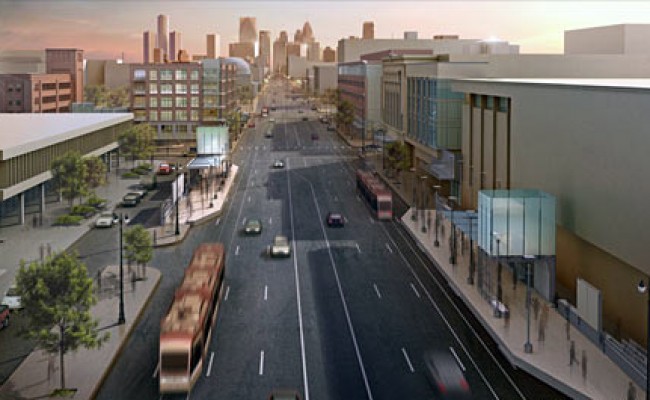
Detroit Metro: Hinkins reported that the Regional Transportation Authority’s Citizen Advisory Committee will be expanded from 30 to 50 with the hopes of better representation from Washtenaw and Macomb counties. Review of Bus Rapid Transit routes will be a major topic in the coming months. An important issue is whether the RTA will favor Bus Rapid Transit or commuter rail for service between Ann Arbor and Detroit. In fact, rail lines parallel many of the proposed BRT routes. Gurney noted the 2003 Report on potential commuter rail corridors by John Guidinger. Patterson pointed out that BRT may be the best way to connect points in Oakland County to points in Washtenaw County. Charnetski observed that Grand Rapids is currently building a BRT route.
A top priority of the new RTA CEO John Hertel will be to merge SMART and DDOT, with the former SMART covering the main corridors into Detroit and the former DDOT handling cross city routes.
Charnetski reported that Ann Arbor is now served by the AAATA, the Ann Arbor Area Transportation Authority, since both the City of Ypsilanti and Ypsilanti Township have jointed the authority. Pittsfield Township has purchased AAATA services for a period of five years.
East/Central: Wallington has seen no activity at the site of the new East Lansing Transportation Center. After serious flaws were noted, the consultants are redrafting plans.
Don Westcott is working to revive the Blue Water Coalition and expand it beyond the Convention and Visitor Bureaus to the Chambers of Commerce and the business community. Hopefully, MDOT will be willing to fund promotion of the Blue Water as a means to get between points within Michigan. The group is concerned about the many stations along the route that are closed and dark at train time in the evening.
Community Conversations: Horvath has been a subscriber to the Center for Michigan’s Online Magazine, which she believes is a very effective tool of communication. One of the Center’s programs is called “Community Conversations”, which brings people from a particular community come together to focus on such issues as prosperity, quality of life, investment in infrastructure, and public transportation. Horvath thinks MARP could sponsor a Community Conversation focusing on transportation. Possibly we could partner with another organization such as Central Michigan University.
Chase has made inquiries with the Center for Michigan. The forum could be just for MARP members or partner with others.
Robert Patterson has participated in a forum and would be very favorable to MARP’s involvement.
Rail Passenger Survey: Horvath turned a copy of a 2006 survey of rail passengers over to Secretary Gurney to keep in his files.
Jackson Depot Rehabilitation: Restoration of the Jackson Amtrak station continues, John Guidinger reported. The foundations have been stabilized and rebuilt, drainage around the station and the express building upgraded, sidewalks on the west and street sides rebuilt to ADA standards, and the roofs of the track canopy and the front entrance replaced. The eaves and the eave soffits have been reconstructed and many downspouts replaced. Yet to be done are the full roof, additional exterior pointing and paving of the parking lot. Additional funding will be required to accomplish these projects.
Current Track Work: Steve Sobel briefed the group on the status of the track work on the Wolverine line. Five Norfolk Southern work gangs are working ten hour days, Monday-Thursday, in an attempt to get as much done as possible before the snow flies. Rails are being replaced on the worst curves first. Old rail is being color coded as it is removed, with the best to be used on secondary lines and the worst to be scrapped. Numerous grade crossings are being rebuilt. New fiber optics are being laid between Kalamazoo and Battle Creek. Much of this year’s work has been done from Dearborn to Jackson, so the focus will be on the Jackson to Kalamazoo section in the coming weeks.
Public Transportation Issues: Platz noted the excellent article about Amtrak in Michigan in the October 6 issue of the Detroit Free Press. He also mentioned an article in the October 2 issue of USA Today reporting that young Millennium generation people prefer public transportation. Wallington indicated that Governor Snyder supports rail because young people want trains.
Westcott expressed frustration that motor coach and rail connections are not published at all or not as clearly as they should be. Patterson noted the need for more North-South routes. Wallington expressed fear that the state may cease supporting the Indian Trails bus route along Lake Huron. He would like to see an additional route along Lake Michigan. Gurney sensed an opportunity to add a second frequency from Central Michigan University to East Lansing to give students better connections with both the Blue Water to Chicago and Michigan Flyer to Ann Arbor and Detroit Metro Airport.
Michigan Railroad Conference: Chase reported that she, Tischbein, Horvath and Krieg had all attended the Michigan Railroad Conference at the Library of Michigan on September 21. Krieg gave an excellent presentation on the current rail situation in Michigan. Membership brochures and The Michigan Passenger were distributed.
Minutes of the Monthly Membership Meeting in Manistee on August 10 were reviewed.
Westcott moved approval. The motion was seconded by Sobel and approved by the members present.
Adjournment: The meeting adjourned at 2:28 p.m.
Respectfully submitted: Approved:
Hugh D. Gurney Robert Tischbein
Secretary Chair

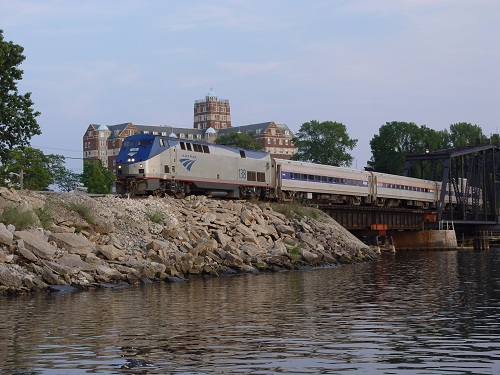

 The last of three Michigan track improvement phases for the 2013 construction season begins between Jackson and Kalamazoo on Oct. 14. While the project will cause some delays and modified weekday schedules, the result will be upgraded tracks and more reliable service as part of the Accelerated Rail Program being carried out by Amtrak for the Michigan Department of Transportation (MDOT).