Che sorpresa ti aspetta nel vivace casinò lazybar: generosi bonus, giri gratuiti e una selezione di giochi colorati renderanno la tua serata fantastica.
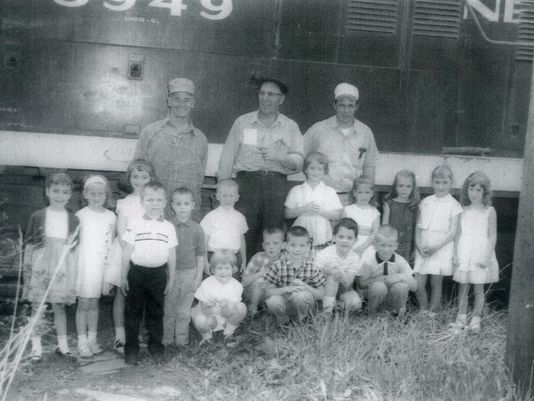
The children in this photo are students in the 1960 kindergarten class of Mrs. James Lingo, Jr. They were visiting railroaders at the Shelby Depot. In the back row, from left, are engineer Richard Hoover of Galion, conductor Bill Hocker of Galion and brakeman Roger Weaver of Ontario.(Photo: Submitted photo)
“To ride in the cab of a Hudson doing 80 miles an hour is the experience of a lifetime,” Roger Weaver said.
He should know. He spent 52 years as a railroad man, working for the New York Central’s great passenger steam engines before diesels took over in the late 1950s.
Weaver said he quit school in Cincinnati in his junior high school year to become a railroader.
“I loved trains and railroading and couldn’t wait to get started,” he said.
By the time he was 17 he was living with his grandparents in New London and gravitated to the New York Central’s Big Four line that connected Cleveland to Columbus, Cincinnati and St. Louis.
He worked as a tower operator, a brakeman and a conductor on freight and passenger trains.
As a brakeman he often rode in the cabs of the Big Four’s Hudson, Mohawk and Niagara steam engines before the diesel era began.
“I can remember when 55 passenger trains on the Pennsylvania and New York Central would pass through Crestline in one day.”
As a temporary tower operator in Vernon Junction, Weaver watched the last Pennsylvania Railroad train cross the Big Four on its way to Toledo. That line is long gone, as are many of the lines Weaver worked.
He was a brakeman on a freight train pulling 175 cars across the B&O diamond in Shelby.
There was a time, he said, when passenger trains ran south on the B&O from Willard to Newark.
Trains in Willard were headed for Chicago in one direction and Baltimore and Washington, D.C. in the other direction.
He can remember busy days switching freight cars from Crestline to Shelby; Greenwich to New London and Wellington to Berea on the NYC’s Big Four line.
He said the huge yards at Bellefontaine were impressive.
“Now they are gone. It’s just all weeds,’’ he said.
He spent most of his career working for the Penn Central and then Amtrak. He retired in 2007.
Weaver wasn’t aware that there would be a special event this coming weekend at Galion’s Big Four Depot but he may be able to make it.
After all, railroads were his life and he hasn’t forgotten.
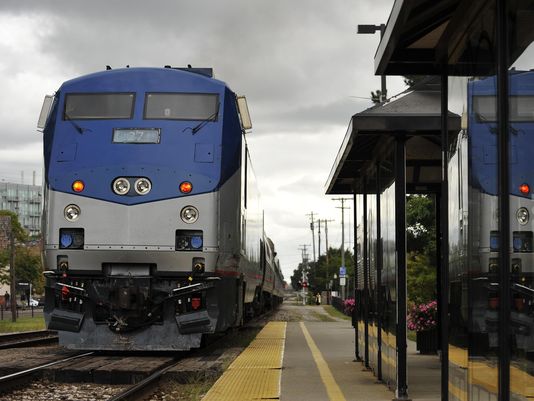
The Saginaw man who allegedly stabbed four people on an Amtrak train coming into Niles last December was arraigned Wednesday on eight new charges. He is scheduled for a preliminary hearing next Tuesday on the new charges, as well as the four initial charges against him.
Michael Darnell Williams, 44, now faces four charges of assault with intent to murder, as well as one additional charge of assault with intent to murder, five counts of assault with a dangerous weapon, one count of carrying a concealed weapon (knife) and one count of resisting and obstructing police.
No determination, however, has been made yet on whether he can be found criminally responsible for the acts.
Williams was arrested after a Dec. 5 stabbing aboard an Amtrak train headed to Port Huron from Chicago. Williams told police he started attacking people after one person he had been talking to “turned into a demon.”
Amtrak personnel called Niles police. When they arrived at the Niles station, officers made their way aboard the train and confronted Williams, who they said was armed with a knife.
Niles police officer Shane Daniel subdued Williams with a Taser and arrested him.
The four initial charges stemmed from his alleged assaults on conductor Dontrel Bankhead, 40, who was stabbed two times in the head, two times in the neck and several other times in the body; passenger Bonnie Cleasby, 59, who was stabbed in the abdomen; passenger Dan Stewart, 56, who was stabbed once in the check; and passenger Gail Vanhorst, 47, who was stabbed in the chest.
The new assault with intent to murder charge is for his alleged assault on officer Daniel, while the five assault with a dangerous weapon are for his alleged assaults on the conductor, three passengers and Daniel. The resisting and obstructing police charge is for allegedly resisting Daniel.
Williams was sent for a forensic examination after his arrest and was found to suffer from visual hallucinations, delusions, paranoia and schizophrenia. He then received treatment and last week was found to be competent to stand trial in a court hearing before Berrien County Trial Judge Dennis Wiley.
Wednesday, Wiley said the preliminary hearing on all 12 charges will be held next Tuesday, despite a request from defense attorney Shannon Sible to delay the hearing until a report comes back on whether Williams can be held criminally responsible for his actions.
“He shouldn’t have to make a decision on how to proceed until we get the report on criminal responsibility,” Sible said.
Whether Williams can be held to be criminally responsible for his actions is different than the competency issue, Assistant Prosecutor Amy Byrd said. If Williams is found to be not criminally responsible, his attorney could use it as a defense.
While Sible asked that the preliminary hearing be delayed, at the same time, he noted that Williams is “quite frustrated” with the time that has elapsed since his arraignment last December.
The $400 million effort to build a new rail tunnel underneath the Detroit River has been put on hold because its private-sector backers say the business case for new tunnel doesn’t exist.
“It’s idle for now,” said Marge Byington Potter, executive director of corporate affairs for the Continental Rail Gateway. The project has been in the planning stage since 2001.
She did not explain why the project is on hold and deferred all other comment to the project’s primary financial backers, Toronto-based Borealis Infrastructure Management Inc. and Calgary, Alberta-based Canadian Pacific Railway Ltd.
The companies issued a joint statement via email Monday afternoon: “The Continental Rail Gateway replacement tunnel is being idled pending review by the partners, Canadian Pacific and Borealis Infrastructure. At present, the business case and economics of the project are not sufficient to proceed with a majority privately funded development. We continue to focus our attention on the existing tunnel, which remains in full commercial operation and is a key component of Canadian-United States border infrastructure.”
CP and Borealis had committed $200 million to the project, with the remainder expected to come from government sources.
The state of Michigan last year committed $10 million to the tunnel project, contingent on its getting all its other funding and approvals. No other government funding had been secured.
Borealis is the investment arm of the Ontario Municipal Employees’ Retirement System. It is financing most of the tunnel work and owns the land necessary for the project near Detroit’s current rail tunnel. Borealis increased its stake in the tunnel and the project to 83.5 percent from 50 percent in an $87.7 million deal in 2009.
Montreal-based Canadian National Railway Co. had been part of the project but sold its share to Borealis in February 2000.
Byington Potter told Crain’s this month that project officials were in talks with the U.S. Federal Railroad Administration for a $190 million Railroad Rehabilitation & Improvement Financing loan to round out the capital costs. For the loan to happen, Canadian federal environmental approval and all other permits had to be in hand. That process was ongoing, Byington Potter said at the time.
She said she expected Canadian environmental approval by the end of summer. The project wasn’t seeking any other Canadian and U.S. grants to offset the borrowing, she said.
Once all the capital was in place, the project had to receive approval to proceed under the Canadian International Bridges and Tunnels Act and get a U.S. presidential permit from the U.S. State Department.
Construction was estimated to take two years.
The financing premise is that the project would recoup its costs from tolls that rail companies negotiate. Such tolls are typically based on each kind of rail car, such as tankers and boxcars. Byington Potter didn’t have toll estimates.
Land for the new tunnel is near the current rail tunnel’s Detroit entrance, just southwest of the U.S. post office at West Fourth and Eighth streets. It handles about 400,000 rail cars annually.
The traffic volume with the new tunnel was expected to be about the same but would be done more efficiently with the use of double-stacked rail cars, Byington Potter said.
The new tunnel was planned to be about 50 feet below the riverbed, 30 feet deeper than the current tunnel. It also would be several hundred feet longer and would be dug by specialized boring machinery rather than constructed as tubes sunk into the river, which is how the current tunnel was built in 1910.
Design and engineering work on the new tunnel has been done by Omaha, Neb.-based HDR Inc.; Toronto-based MMM Group; and Iselin, N.J.-based Hatch Mott Macdonald Group Inc.
The current twin-tube tunnel underwent a $27 million enlargement of one tube in 1993 that allowed it to accept some but not all modern stacked container rail cars.
That expansion of what’s known formally as the Michigan Central Railway Tunnel eliminated the need to move cargo, especially automobiles and trucks, by ferry across the Detroit River. The tunnel remains unable to accommodate the largest stacked rail cars, especially the 9-foot-6-inch “high-cube” shipping containers that are stacked.
Canadian National built a large, modern tunnel underneath the St. Clair River between Port Huron and Sarnia that opened in 1994 at a cost of $200 million. CN maintains that tunnel almost exclusively for its own trains.
The new tunnel would be open to all rail companies, Byington Potter said.
The plan for a new tunnel originally called for the current tubes to be converted into a commercial truck link, but that was scrapped after Canada and Michigan opted to build a new bridge about a mile from the Ambassador Bridge — a span scheduled to open by 2020 and be called the Gordie Howe International Bridge.
Before taking on its current name, the tunnel effort was called the Detroit River Tunnel Partnership, and the tube itself was nicknamed the “Jobs Tunnel” because of the thousands of jobs backers predicted it would create or preserve.
Tunnel backers also noted that the new tube would be near the proposed $445 million Detroit Intermodal Freight Terminal being built by CSX, Norfolk Southern, Canadian Pacific and Canadian National as a consolidated terminal near Wyoming Avenue and I-94. The terminal is designed to accommodate existing and future freight demands.
John Taylor, chairman of the supply chain management department at Wayne State University’s School of Business Administration, has been on record for years as skeptical about the tunnel project.
“It’s very difficult financially because there’s so little traffic that doesn’t fit now,” he told Crain’s this month. “It’s just hard to justify the financing. Until we get to the point most of the container traffic does not fit, it’s just hard to justify a new railroad tunnel. I think it’s up in the air. The business case is very difficult.”
The Michigan Environmental Council has undertaken a $100,000 feasibility study on public transporation options, including establishing rail service between Detroit and Grand Rapids.(Photo: John T. Greilick;file / The Detroit News)
Passenger train service between Detroit and Grand Rapids could be reinstated in the next decade if state transportation experts determine the public has an appetite for a new line and can figure out how to pay for it.
Supporters say the idea of connecting Michigan’s two largest cities by train is gaining appeal on both sides of the state as each undergo economic and cultural revivals making passenger service more appealing to business travelers and tourists.
The Michigan Environmental Council, the Lansing-based group that supports increasing public transportation options, has undertaken a $100,000 feasibility study and embarked on a series of hearings this summer along the route to get the public’s input. More hearings are scheduled later this month in Dearborn, Plymouth, Ypsilanti and Brighton. Also involved in the effort are the Ann Arbor Area Transportation Authority and the Michigan Department of Transportation.
“There really is not a way to connect to Michigan’s major cities and our coasts without taking a car,” said Elizabeth Treutel, a transportation police expert with the council. “There are no rail options. If Michigan wants to be competitive, if we want to attract talent, if we want to keep our college-educated people here, we have to have more and better options to get around. And people have to be willing to recognize that and invest in it.”
Even boosters acknowledge that re-instituting the service will be challenging.
“Getting rail service up and running is a very difficult task,” said Kathleen Lomako, executive director of the Southeast Michigan Council of Governments, which helps regional leaders with transportation planning. SEMCOG has been working on a passenger rail project from Ann Arbor to Detroit for years and struggled with funding.
“Connecting our region to other parts of the state, it’s a good thing. It’s about figuring out how difficult is that going to be to do, how much it’s going to cost and who pays for it. Those are all questions that need to be answered.”
The Detroit to Grand Rapids line isn’t the only one being explored. Preliminary discussions have been underway for months on establishing a rail connection from Ann Arbor to Traverse City. The Michigan Land Use Institute is pushing MDOT officials to study the feasibility of the route using existing freight rails with the hope that it could be operational by 2025.
Michigan hasn’t had a Grand Rapids-to-Detroit line since Amtrak was created in 1971. Those heading the effort said that four feasibility studies on resuming service were done in the 1980s through 2002.
The current Coast-to-Coast Passenger Rail study is examining three possible routes that would run on freight tracks from Holland through Grand Rapids and Lansing and to Detroit. Two routes would go through Ann Arbor; one going through Jackson and Ann Arbor and the third through Plymouth and Brighton.
The study will be conducted by a transportation management firm to determine cost, time, ridership and how to fund it. It will also consider public feedback given at meetings held by the Michigan By Rail team, a coalition of organizations led by MEC and the Michigan Association of Railroad Passengers.
Organizers said the line could take a decade to implement. The train, Treutel said, would have to go between 79 and 110 mph to compete with car travel.
The only way to get from Detroit to Grand Rapids and back by passenger train involves traveling to Chicago and connecting for a return trip.
Andrew Layman, who lives in Ann Arbor and attended a public hearing on the rail project there last month, said he’s interested in seeing better rail options in the state that are “reliable and affordable.” But he worries about whether the public will eventually support the service with tax dollars.
“The entire country and the state of Michigan is lacking, really,” said Laymen, 29, comparing the state’s train service to that of Europe. “I just think we’re behind the times and this is long past due. It’s a good initial study.”
Grand Rapids Mayor George Heartwell, who backs the passenger rail concept, said he’d like to see it “be a reality” rather than a “pipe dream of train enthusiasts.’’
“I suspect that people here would want to make good use of a train if it was available to Detroit for business, for entertainment, to go over and see a Tigers game in the afternoon and the Red Wings in the evening,” Heartwell said. “I hope there would be a similar appetite in Detroit to come over to Grand Rapids … for ArtPrize or to drink the craft beers.”
But Heartwell sees more taxes as the stumbling block.
“If you are looking at Proposal 1, you say it’s a pretty slim appetite,” the mayor said of last spring’s statewide road proposal that was trounced by voters.
State officials said they are interested but proceeding cautiously.
“MDOT is working with the locals to address the legislative requirements, but there is a lot of ground to cover before this would advance beyond a study,” said Tim Hoeffner, director of MDOT’s office of rail. “We will need to examine various factors like what the ridership and revenue will be, where the operating funding would come from, whether or not communities would provide stations, would the host railroads allow it, and what kind of safety systems are needed.”
Still, Treutel said there is a “viable reason to look at this right now” in part because Amtrak ridership has been climbing over the last decade.
Michael Ford, the CEO of the Regional Transit Authority, said that although his focus is on improving transit in southeastern Michigan, the discussions for the passenger rail service are important for the public to weigh.
“Any mobility options that can connect the region from a city like Grand Rapids into Detroit would be obviously very, very important,” Ford said. “People want more mobility, they want to be able to get to great cities and go back and forth and not have to take their car.”
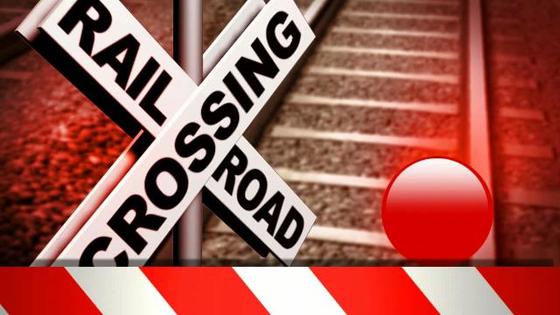
The state is getting a new grant to boost rail safety education. Michigan Operation Lifesaver has been awarded $8,400 from Operation Lifesaver, Inc., in partnership with the Federal Railroad Administration.
It is part of the nonprofit safety group’s ongoing “See Tracks? Think Train!” public awareness campaign.
The money will be used to boost awareness on billboards, movie theater advertising and displays for public events.
Federal statistics show that about every three hours, a person or vehicle is hit by a train in the United States.
Michigan ranks 10th nationally for crossing collisions train incidents, with 13 deaths from 79 crashes in 2014 according to Sam Crowl, State Coordinator for Michigan Operation Lifesaver.
L’avenir du jeu est arrivé avec les casinos en ligne. Des machines immersives aux tables live, profitez d’options sûres et de divertissement illimité.